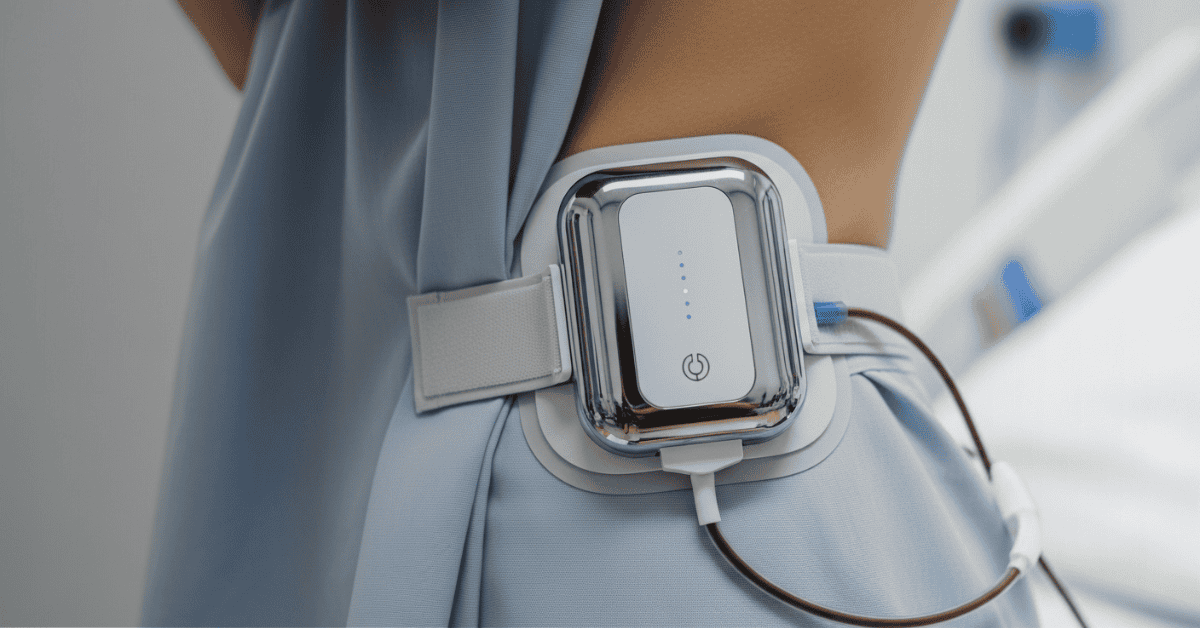
Revolutionary medical technology promises to liberate millions from the constraints of traditional dialysis treatments, offering new hope for kidney disease patients worldwide.
The Dawn of Portable Freedom
Maria Gonzalez clips a device the size of a laptop battery to her belt each morning, then goes about her day—walking her dog, attending meetings, cooking dinner. This isn’t a smartphone or fitness tracker. It’s an artificial kidney, quietly filtering toxins from her blood while she lives her life.
For the first time in medical history, researchers have created wearable dialysis machines that could free millions of kidney disease patients from the prison of treatment centers. These revolutionary devices promise to transform one of medicine’s most challenging chronic conditions.
The Weight of Kidney Disease
Chronic kidney disease affects more than 850 million people globally, making it one of the world’s fastest-growing health threats. In the United States alone, over 37 million adults live with this condition, though most remain unaware of their diagnosis until the disease reaches advanced stages.
Traditional hemodialysis has remained largely unchanged since the 1960s. Patients spend 12 to 15 hours weekly tethered to room-sized machines in clinical settings. The treatment schedule dominates their lives, limiting travel, work opportunities, and simple daily activities.
The process itself mirrors the kidney’s natural function. Blood flows through tubes to an external filter that removes waste products and excess fluid, then returns to the body. While life-saving, conventional dialysis provides only 10 to 15 percent of normal kidney function.
Engineering Miniaturization Breakthrough
Scientists at the University of California San Francisco and other leading institutions have spent decades shrinking dialysis technology. Their latest prototypes weigh less than 10 pounds and operate continuously, more closely mimicking healthy kidney function.
The wearable artificial kidney uses the same basic principles as traditional machines but employs revolutionary miniaturization techniques. Advanced microfluidics technology creates channels thinner than human hair to process blood efficiently. Specialized membranes, developed through nanotechnology, filter waste products while preserving essential proteins.
Battery technology borrowed from electric vehicles powers these devices for 8 to 24 hours between charges. Smart sensors monitor blood chemistry in real-time, automatically adjusting filtration rates to maintain optimal balance.
Early clinical trials show promising results. Patients using wearable devices report improved energy levels, better sleep quality, and enhanced overall well-being compared to standard dialysis treatments.

The Silicon Valley Connection
The development of wearable artificial kidneys represents a convergence of multiple technological advances. Silicon Valley companies have contributed miniaturized pumps, sensors, and control systems originally designed for smartphones and computers.
Bioengineering firms have developed artificial membranes that last longer and filter more effectively than previous generations. Materials science breakthroughs have produced lighter, more durable components that can withstand the constant motion of daily life.
The devices incorporate artificial intelligence to learn each patient’s unique physiology. Machine learning algorithms optimize treatment parameters automatically, reducing the need for constant medical supervision.
Some prototypes connect wirelessly to smartphones, allowing patients and doctors to monitor treatment remotely. This connectivity enables rapid adjustments and early detection of potential complications.
Global Health Implications
The potential impact extends far beyond developed nations with established dialysis infrastructure. In many parts of the world, kidney disease patients have limited or no access to regular dialysis treatments.
Portable devices could democratize kidney care, bringing treatment to rural areas and developing countries where traditional dialysis centers remain economically unfeasible. Solar-powered charging systems could make the technology accessible even in regions with unreliable electricity.
Economic modeling suggests that widespread adoption of wearable dialysis could reduce healthcare costs significantly. Patients would require fewer emergency hospitalizations and could maintain productive employment longer.
The technology also addresses the growing shortage of dialysis centers in many countries. As kidney disease rates continue climbing due to diabetes and aging populations, traditional treatment infrastructure struggles to keep pace.
Overcoming Technical Challenges
Despite promising advances, significant hurdles remain before wearable artificial kidneys become widely available. Current prototypes require frequent filter changes and careful monitoring to prevent infections.
Blood clotting presents an ongoing challenge. Devices must maintain optimal blood flow without causing dangerous clots, requiring sophisticated anticoagulation systems that balance effectiveness with safety.
Power consumption remains a critical limitation. Researchers continue developing more efficient pumps and longer-lasting batteries to extend operating time between charges.
Regulatory approval processes will likely take several more years. The U.S. Food and Drug Administration requires extensive safety and efficacy data before approving such complex medical devices.
The Human Element
Beyond technical specifications, wearable artificial kidneys represent something more profound: the restoration of human dignity and autonomy. Patients describe feeling like prisoners of their treatment schedules, unable to travel or maintain normal relationships.
Dr. Sarah Chen, a nephrologist at Johns Hopkins University, observes that her patients using prototype devices show marked improvements in mental health. “They’re not just surviving,” she notes. “They’re living again.”
The psychological benefits may prove as significant as the medical advantages. Patients report feeling more optimistic about their futures and more willing to pursue long-term goals when freed from rigid treatment schedules.
The Path Forward
Multiple research teams worldwide are racing to perfect wearable dialysis technology. The Kidney Project, a collaboration between UC San Francisco and Vanderbilt University, aims to create a fully implantable artificial kidney within the next decade.
Other approaches focus on hybrid systems that combine wearable devices with periodic clinical treatments. These strategies could offer immediate benefits while researchers work toward completely portable solutions.
Investment in artificial kidney research has surged in recent years, with both government agencies and private companies providing substantial funding. The National Institutes of Health has committed over $650 million to artificial kidney development projects.
As these technologies mature, they promise to transform not just dialysis care, but our broader understanding of how medical devices can integrate seamlessly into human life. The dream of wearable organs may soon become reality, offering hope to millions who have waited too long for freedom from the machines that keep them alive.
Sources
• The Kidney Project, University of California San Francisco (2023) • National Institute of Diabetes and Digestive and Kidney Diseases, NIH (2024) • Nature Biomedical Engineering – Wearable Artificial Kidney Development (2023) • World Health Organization Global Health Observatory (2024) • Journal of the American Society of Nephrology – Portable Dialysis Systems (2023) • Johns Hopkins University School of Medicine – Nephrology Research (2024) • The Lancet – Chronic Kidney Disease Global Burden (2023) • American Society of Nephrology Clinical Research (2024)
Disclaimer
This article is for informational purposes only and should not replace professional medical advice. Patients with kidney disease should consult their healthcare providers about treatment options appropriate for their specific conditions.