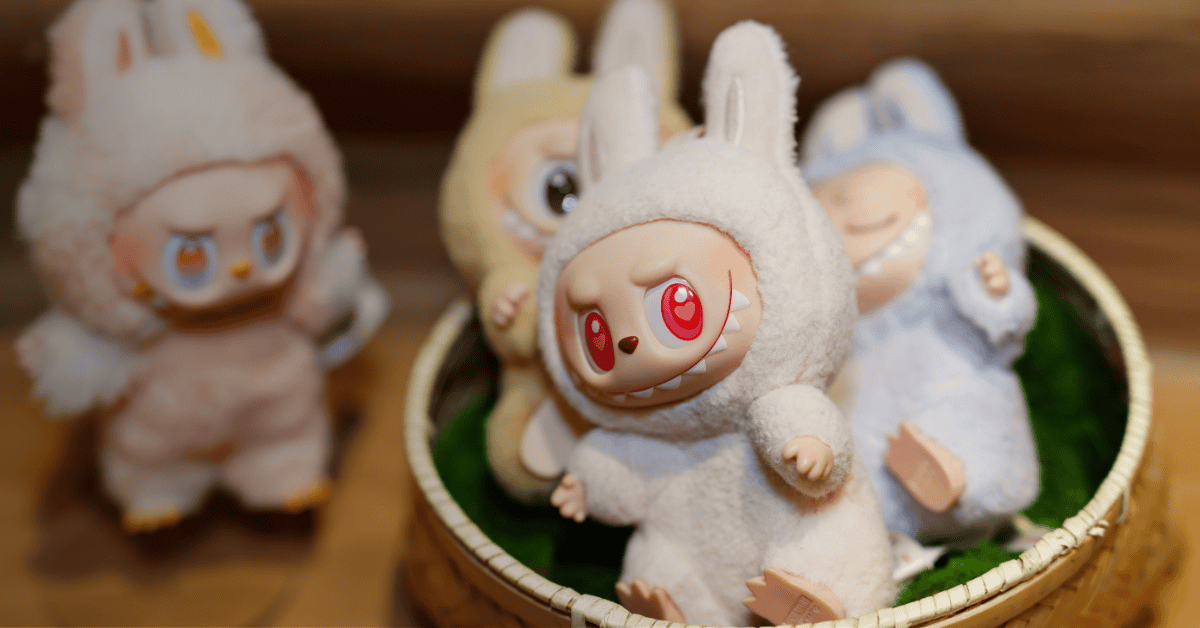
The small monster with sharp teeth grins mischievously from celebrity handbags worldwide. But beneath Labubu’s cute exterior lies a deeper story rooted in ancient Nordic folklore that reveals how modern collecting culture connects us to our primal fascination with mythical creatures.
In Thailand’s bustling markets, vendors sell Labubu-inspired Buddhist amulets. In 2024, due to the viral popularity of Labubu in Thailand, many Thais began to believe that its image could bring wealth and good fortune. As a result, it was made into Buddhist amulets and sacred tattoos. The phenomenon illustrates how deeply this collectible has penetrated global consciousness, transforming from art toy to cultural symbol in less than a decade.
The Nordic Forest Connection
Hidden within the chaos of modern collectible culture lies an ancient story. Labubu was created in 2015 by Hong Kong-born, Netherlands-raised artist Kasing Lung as part of his “The Monsters” series, which draws inspiration from Nordic folklore. The character originated not from corporate boardrooms but from centuries-old Scandinavian tales of forest spirits and mischievous creatures.
LABUBU is an elf-like creature created by Kasing Lung, first appearing in the picture book The Story of Puca. LABUBU lives deep in the forest, standing about as tall as a housecat, and is part of a troupe of nearly one hundred elves. This forest dweller embodies the Nordic tradition of spirits that inhabit the liminal spaces between civilization and wilderness.
Nordic folklore has long featured creatures that blur the lines between benevolent and mischievous. These beings served as cautionary tales and explanations for unexplained phenomena in dense Scandinavian forests. Lung drew from this rich tradition to create his monster series, giving modern audiences a connection to ancestral storytelling.

From Picture Books to Pop Culture Phenomenon
The transformation from literary character to global commodity began with strategic partnerships. While Labubu fans have been around for a decade, the sensation didn’t really take off until Lung made the collaboration with Pop Mart in 2019. Labubus are small, elf-like plush toys that appear mischievous, yet cute. Their faces are made up of sharp-teeth smiles, big eyes, and blushed cheeks.
Pop Mart’s blind box strategy amplifies the collecting experience through mystery. Pop Mart sells hundreds of different versions of Labubu — varying in color and level of rarity — and fans don’t know which one they’ve purchased until unboxing This uncertainty taps into fundamental psychological rewards systems, creating anticipation similar to gambling or treasure hunting.
Celebrity endorsements accelerated Labubu’s rise to cultural prominence. Over the years, it has been spotted on the bags of pop singers like Dua Lipa, Rihanna, and Lisa from the K-pop group BLACKPINK. These high-profile appearances transformed the collectible from niche art toy to mainstream fashion accessory.
The Psychology of Monster Collecting
The appeal of collecting small monsters reveals deeper human psychological patterns. At the heart of its rise is one small but mighty character: Labubu, a mischievous rabbit-like figure who has become the face of a massive cultural and commercial movement. The story of Pop Mart is not just about toys—it’s about the power of storytelling, emotional connection, and strategic marketing that understands our innate fascination with creatures that embody both threat and comfort.
Evolutionary psychologists suggest humans developed heightened attention to small creatures with exaggerated features as survival mechanisms. Large eyes and ambiguous expressions trigger protective instincts while sharp teeth create controlled excitement. Labubu perfectly balances these competing impulses, making the character both approachable and intriguing.
The blind box format adds another psychological layer. Unpredictability creates dopamine releases similar to those experienced during social bonding or discovery. Collectors report feelings of anticipation and satisfaction that mirror ancient reward systems tied to foraging and exploration.
Cultural Bridge Between East and West
Labubu’s global success demonstrates how folklore transcends cultural boundaries. A Hong Kong artist inspired by Nordic mythology, manufactured by Chinese companies, and embraced by Western celebrities creates a unique cultural fusion. This crossover reflects increasing globalization of creative expression and shared mythological themes.
The character’s adoption into Thai spiritual practices shows how modern objects can acquire traditional meanings. In 2024, due to the viral popularity of Labubu in Thailand, many Thais began to believe that its image could bring wealth and good fortune. As a result, it was made into Buddhist amulets and sacred tattoos. This transformation from collectible to talisman mirrors historical processes where imported objects gained local spiritual significance.
Market data reveals the scope of this cultural phenomenon. Plush toy sales went up by 1200%. Resale prices are often two or three times higher than the store price. Experts think revenue will grow 8-12% each year until 2027. Market share is growing fast in Southeast Asia and North America. These numbers indicate genuine cultural adoption rather than temporary trend.
The Warning Behind the Wonder
The rapid monetization of folklore raises questions about cultural appropriation and commercialization. When ancient stories become modern products, their original meanings risk dilution or distortion. Nordic forest spirits carried complex messages about humanity’s relationship with nature and the unknown.
Labubu’s commercial success highlights how global capitalism transforms cultural artifacts into commodities. While this process can preserve and spread cultural knowledge, it can also strip away context and reduce rich traditions to simplified marketing messages.
The blind box phenomenon also raises concerns about gambling-like mechanics in collectible culture. Young collectors may develop unhealthy purchasing patterns while chasing rare variants, creating financial stress and compulsive behaviors.
Forward: Folklore in the Digital Age
As Labubu continues evolving from collectible to cultural symbol, its journey reveals broader patterns in how traditional stories adapt to contemporary contexts. Digital platforms and global manufacturing enable folklore to transcend geographic boundaries while raising questions about authenticity and ownership.
The character’s future developments will likely include expanded multimedia presence, augmented reality features, and continued celebrity collaborations. Kasing Lung (born December 31, 1972) is a Hong Kong illustrator and toy designer best known as the creator of Labubu, sold by the brand Pop Mart, which he originally introduced as a character in his series The Monsters. Lung has achieved global recognition with his release of over 300 different variants, suggesting continued expansion of the Labubu universe.
The success of folklore-inspired collectibles may inspire other artists to explore traditional stories from their own cultures. This trend could democratize mythology, allowing diverse voices to share ancestral wisdom through contemporary mediums.
What began as forest spirits in Scandinavian tales now grins from handbags across continents, proving that human fascination with mysterious creatures transcends time and technology. In an increasingly digital world, our connection to ancient stories through tangible objects may be more important than ever, offering touchstones to cultural memory in the palm of our hands.
Sources
• NPR – Labubu plush toy origin and celebrity adoption (2025) • Wikipedia – Labubu cultural impact and Thai spiritual adoption (2024-2025)
• KraneShares – Pop Mart collaboration and Chinese cultural influence analysis (2025) • China Briefing – Artist Kasing Lung background and Nordic folklore inspiration (2025) • CNBC – International status symbol development and market data (2025) • Canvas & Charms – Nordic mythology connections and character development (2025) • Tatler Asia – Creator profile and cultural significance (2025) • McMillan Doolittle – Market analysis and collectibility psychology (2025)