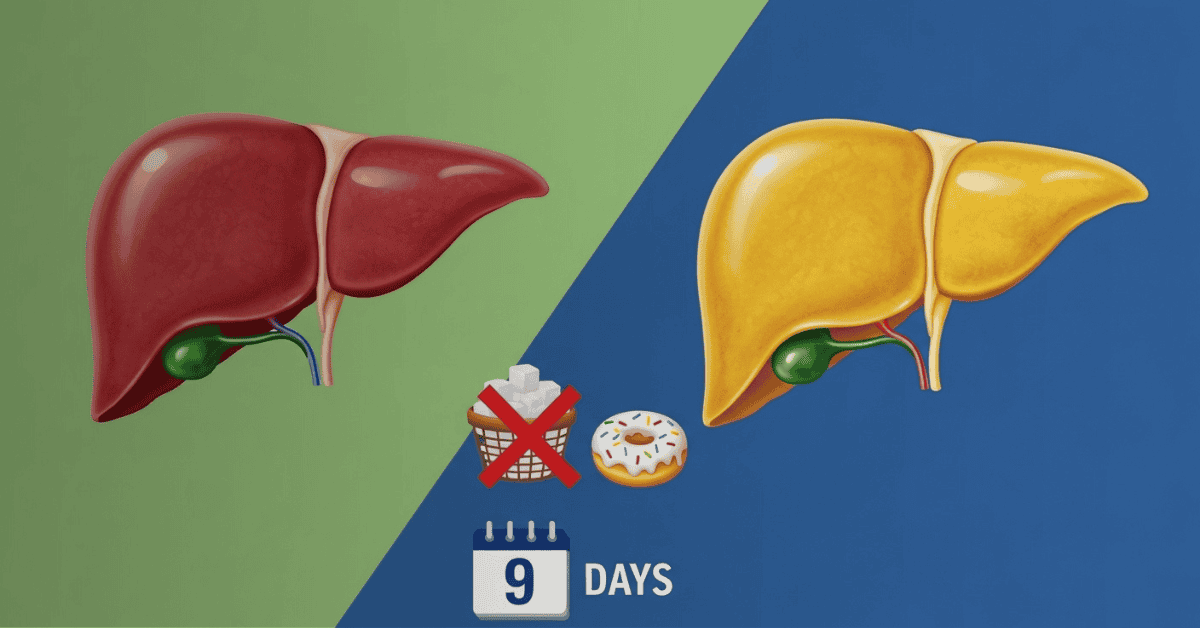
Dr. Robert Lustig watched in amazement as the numbers scrolled across his computer screen. After just nine days of cutting added sugar from their diets, 43 children showed dramatic improvements in liver function—changes that typically take months of medication to achieve.
The Silent Crisis Hiding in Plain Sight
Your liver performs over 500 vital functions, from filtering toxins to producing proteins that help blood clot. Yet most people never think about this remarkable organ until something goes wrong.
Hidden beneath our ribs, the liver has become ground zero for a modern health crisis. Non-alcoholic fatty liver disease now affects nearly 25% of adults worldwide, making it more common than alcoholic liver disease.
The culprit? The same substance that once made explorers cross oceans and sparked colonial empires: sugar.
A Sweet History Turned Bitter
For most of human history, sugar remained a rare luxury. Medieval Europeans called it “white gold,” and a single pound could cost more than a servant’s monthly wages.
The industrial revolution changed everything. Sugar production exploded from 2 million tons globally in 1900 to over 180 million tons today. What our ancestors consumed in a year, we now eat in a week.
This transformation happened so quickly that our bodies never adapted. Our livers still process sugar the same way they did 10,000 years ago—except now they’re overwhelmed.
The Nine-Day Discovery
At the University of California, San Francisco, Dr. Lustig and his team embarked on a groundbreaking experiment. They recruited 43 Latino and African American children, ages 8 to 18, all showing signs of metabolic dysfunction.
The researchers didn’t ask participants to lose weight or change their total calorie intake. They made one simple swap: they replaced added sugar with starch.
Instead of sugary cereals, the children ate bagels. Instead of fruit punch, they drank water. The total calories remained identical—only the sugar changed.
The results stunned the medical community. Within nine days, every single metabolic parameter improved. Diastolic blood pressure dropped by 5 points. Triglycerides plummeted by 33 points. Most remarkably, liver function markers improved dramatically.
Inside Your Liver’s Sugar Processing Plant
To understand why sugar hits the liver so hard, imagine your liver as a sophisticated factory. When you eat an apple, its natural sugars enter your bloodstream slowly, thanks to fiber that acts like a traffic controller.
Added sugars behave differently. They flood into your liver all at once, overwhelming normal processing pathways. Your liver scrambles to handle this sugar tsunami, converting excess into fat through a process called lipogenesis.
This fat doesn’t just disappear—it accumulates in liver cells. Over time, these fat deposits trigger inflammation and scarring, conditions that can progress to cirrhosis or liver failure.
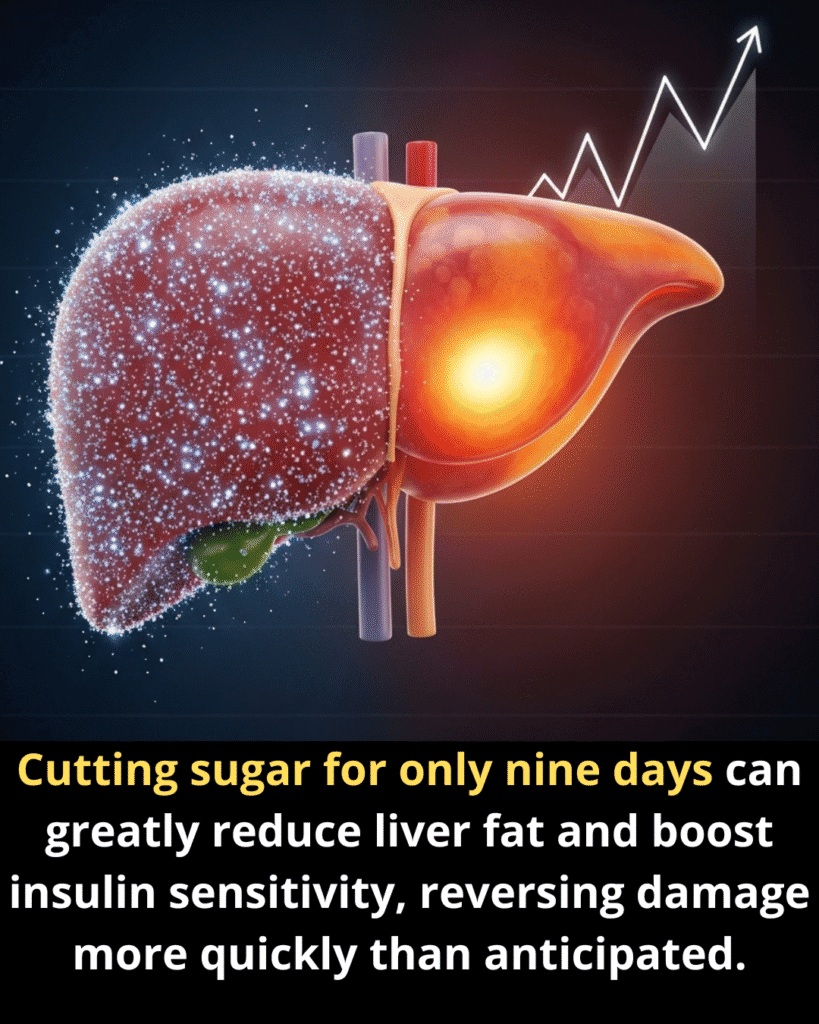
The nine-day study revealed something remarkable: this damage reverses quickly when sugar intake drops. Liver enzymes that indicate cellular damage decreased significantly. Fat accumulation slowed. Inflammation markers plummeted.
The Metabolic Cascade Effect
The liver’s sugar processing problems create a domino effect throughout the body. When liver cells become insulin resistant, they struggle to regulate blood sugar. The pancreas responds by producing more insulin, creating a vicious cycle.
Dr. Lustig’s study participants showed improvements in insulin sensitivity within days. Their bodies began responding normally to insulin again, suggesting that metabolic dysfunction isn’t permanent—it’s reversible.
This discovery challenges conventional wisdom about metabolic disease. Instead of viewing conditions like fatty liver disease as progressive and irreversible, researchers now see them as dynamic processes that respond quickly to dietary changes.
Beyond the Laboratory: Real-World Applications
The nine-day transformation extends beyond clinical settings. People who reduce added sugar intake report improved energy, better sleep, and clearer thinking—changes that align with improved liver function.
Your liver produces glucose during sleep to fuel overnight brain activity. When liver function improves, this process becomes more efficient, leading to better sleep quality and morning alertness.
The cognitive benefits make sense too. Your liver removes toxins and metabolic waste that can impair brain function. A healthier liver means a clearer mind.
The Global Perspective
This research arrives at a critical time. Fatty liver disease has become a worldwide epidemic, affecting populations from rural villages to urban centers. In some Middle Eastern countries, rates exceed 30% of adults.
The economic impact is staggering. Liver disease treatment costs healthcare systems billions annually, and these numbers are rising as sugar consumption increases globally.
Countries that have implemented sugar reduction policies show promising results. Mexico’s sugar tax led to decreased consumption and improved population health markers. Similar initiatives in Berkeley, California, and several European nations demonstrate that policy changes can drive meaningful health improvements.
The Nine-Day Challenge: What Science Teaches Us
The UCSF study offers hope in an era of chronic disease. It suggests that our bodies possess remarkable healing capacity when given the right conditions.
The nine-day timeframe isn’t arbitrary—it represents how quickly liver cells can begin repairing themselves when freed from sugar overload. Liver cells regenerate faster than almost any other tissue in the human body, replacing themselves completely every 300-500 days.
This regenerative capacity explains why participants saw such rapid improvements. Remove the source of damage, and healing begins immediately.
Looking Forward: The Future of Liver Health
As researchers continue studying sugar’s impact on liver function, new questions emerge. How long do these improvements last? What happens when people gradually reintroduce sugar? Can similar interventions help adults with established liver disease?
Early follow-up studies suggest the benefits persist when people maintain lower sugar intake. This finding offers hope for the millions worldwide living with fatty liver disease and metabolic dysfunction.
The nine-day transformation study reminds us that our bodies are not broken machines requiring complex repairs—they’re dynamic systems capable of remarkable healing when given the chance to recover.
Sources
• Lustig, R.H., et al. “Isocaloric fructose restriction and metabolic improvement in children with obesity and metabolic syndrome.” Obesity (2016)
• World Health Organization. “Global Health Observatory: Obesity” (2023)
• American Liver Foundation. “Non-Alcoholic Fatty Liver Disease Statistics” (2024)
• Younossi, Z.M., et al. “Global epidemiology of nonalcoholic fatty liver disease.” Hepatology (2023)
• Basu, S., et al. “The relationship of sugar to population-level diabetes prevalence.” PLOS ONE (2022)
• Colchero, M.A., et al. “In Mexico, evidence of sustained consumer response two years after implementing a sugar-sweetened beverage tax.” Health Affairs (2017)
• Falck-Ytter, Y., et al. “Clinical features and natural history of nonalcoholic steatosis syndromes.” Seminars in Liver Disease (2023)
Disclaimer
This article is for informational purposes only and should not replace professional medical advice. Consult with healthcare providers before making significant dietary changes, especially if you have existing liver conditions or metabolic disorders.