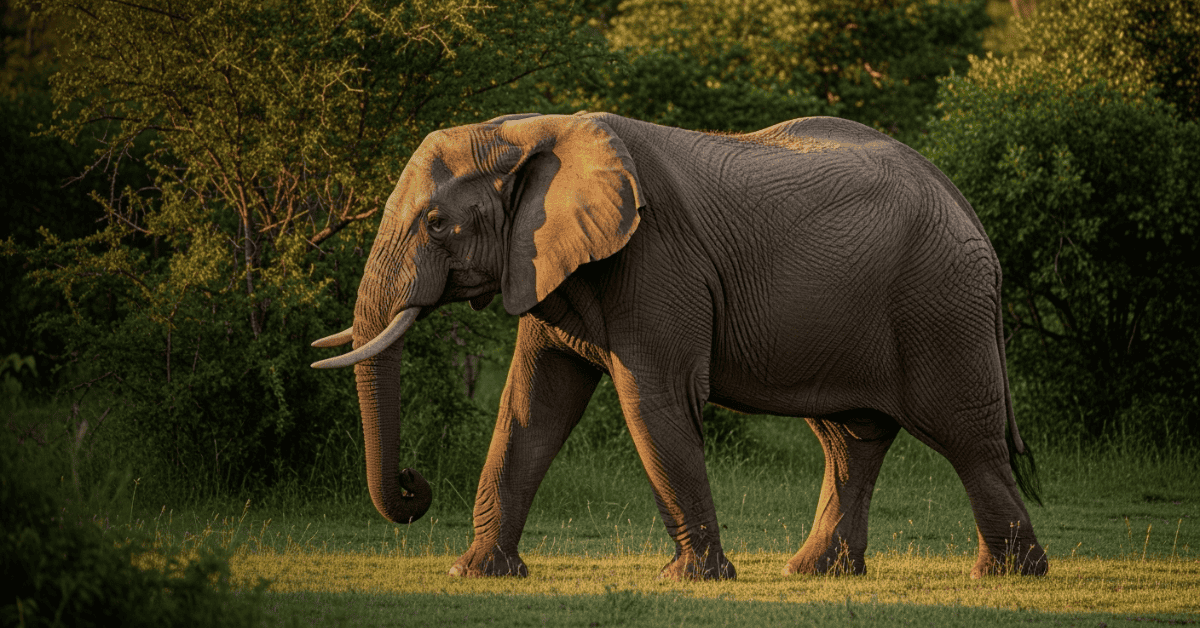
After four decades in captivity, Kenya’s journey to Brazil marks the end of an era as Argentina becomes the first South American nation completely free of captive elephants.
The Final Journey Home
At 6:59 AM on July 7, 2025, Kenya crossed the Argentine-Brazilian border in a specially designed transport truck. The 44-year-old African elephant carried with her the weight of history—she was the last captive elephant in all of Argentina. Behind her, a nation that had held elephants in zoos and circuses for 136 years finally closed that chapter forever.
The moment wasn’t lost on the team from Global Sanctuary for Elephants who had worked tirelessly to make this day possible. As Kenya’s massive form disappeared across the border, Argentina officially joined the ranks of countries that have recognized elephants deserve more than concrete enclosures and metal bars.
Four Decades Behind Walls
Kenya’s story began in the Mendoza Ecopark, where she spent her entire life in captivity. For forty years, her world consisted of stone walls and limited space—a stark contrast to the vast African savannas where her ancestors roamed freely across thousands of miles.
The Mendoza Zoo, later renamed the Mendoza Ecopark, represented the changing attitudes toward animal captivity in Argentina. What once showcased exotic animals for human entertainment gradually transformed into a facility committed to releasing its pachyderms to more natural environments.
Kenya wasn’t alone in her captivity. Other elephants, including Pocha, Guillermina, Tamy, and Pupy, shared similar stories of confinement across Argentina’s zoos and circuses. Each represented decades of life lived within artificial boundaries, far from the complex social structures and natural behaviors that define elephant existence in the wild.
The Great Liberation
The movement to free Argentina’s captive elephants gained momentum over the past several years. One by one, these gentle giants began their journeys to the Global Sanctuary for Elephants in Brazil—South America’s only elephant sanctuary.
Pupy made headlines in April 2025 when she left Buenos Aires after more than 30 years in captivity. The 34-year-old female elephant’s departure marked the end of captive elephants in Argentina’s capital city. Her destination: over 1,000 hectares of Brazilian pasturelands where she could finally interact with others of her kind.
Tragically, not all elephants lived to see freedom. Tamy, a former circus elephant who had endured dominance-based training for decades, died on June 23, 2025, at the Mendoza Ecopark. His death served as a sobering reminder of the urgency driving these rescue efforts.
Kenya’s journey required months of careful preparation. The rehabilitation process at the Mendoza Ecopark focused on preparing her physically and mentally for the transition to sanctuary life. Veterinarians, animal behaviorists, and transport specialists collaborated to ensure her safe passage to Brazil.
A Sanctuary Beyond Borders
The Global Sanctuary for Elephants in Brazil represents a revolutionary approach to elephant care in South America. Unlike traditional zoos, the sanctuary provides rescued elephants with vast spaces to roam, forage naturally, and develop social bonds with other elephants.
Scott Blais, co-founder and CEO of Global Sanctuary for Elephants, captured the significance of Kenya’s arrival: “We owe Kenya a future where healing is possible, where her voice is heard, and where she’s free to just be an elephant—on her own terms.”
The sanctuary’s Female African Habitat offers Kenya an environment designed to meet her species-specific needs. Instead of performing for visitors or living within rigid schedules, she can now express natural behaviors that captivity had long suppressed.
The Science of Elephant Trauma and Recovery
Research has extensively documented the psychological impact of captivity on elephants. These highly intelligent animals possess complex emotional lives, long-term memories, and intricate social structures. Captivity often disrupts these natural patterns, leading to repetitive behaviors, social dysfunction, and chronic stress.
Studies show that elephants in captivity frequently develop physical ailments rarely seen in wild populations. Joint problems, foot diseases, and reproductive issues stem from inadequate space, inappropriate surfaces, and artificial living conditions.
The rehabilitation process involves gradually reintroducing natural behaviors while providing veterinary care for captivity-related health problems. Recovery timelines vary significantly, with some elephants adapting quickly while others require years to overcome decades of confinement.
Sanctuaries like the one in Brazil employ evidence-based approaches to elephant care. Large enclosures, varied terrain, natural foraging opportunities, and social interaction promote physical and psychological healing.
A Continental Shift in Consciousness
Argentina’s achievement extends far beyond Kenya’s individual story. The nation has become the first in South America to eliminate elephant captivity entirely, setting a precedent that could influence policy across the continent.
This transformation reflects broader changes in how societies view animal welfare and conservation. Public opinion has shifted dramatically over the past decades, with growing recognition that some animals—particularly highly intelligent species like elephants—suffer significantly in traditional captive environments.
The economic model of animal entertainment has also evolved. Modern eco-tourism and wildlife conservation generate sustainable revenue while supporting animal welfare and habitat protection. This shift demonstrates that ethical treatment of animals can align with economic interests.
International animal welfare organizations have praised Argentina’s decision. The country’s leadership may inspire other nations to reevaluate their own captive animal programs and consider sanctuary alternatives.
Lessons from the Land of Silver
Kenya’s freedom represents more than one elephant’s journey—it symbolizes humanity’s evolving relationship with the natural world. Argentina’s decision required confronting uncomfortable truths about decades of animal entertainment while committing resources to alternative solutions.
The successful collaboration between Argentine authorities, international animal welfare organizations, and Brazilian sanctuary operators demonstrates that complex conservation challenges require innovative partnerships across borders.
The economic investment in elephant relocation—including specialized transport, veterinary care, and long-term sanctuary support—reflects society’s growing willingness to prioritize animal welfare over traditional entertainment models.
The Future of Freedom
As Kenya settles into her new Brazilian home, her story continues to ripple across South America and beyond. Animal welfare advocates hope her journey will inspire similar transformations in other countries where elephants remain in inadequate captive conditions.
The Global Sanctuary for Elephants plans to welcome additional rescued elephants from across South America, potentially serving elephants from other countries facing similar welfare challenges.
Kenya’s adaptation to sanctuary life will provide valuable data for improving elephant rehabilitation programs worldwide. Her behavioral patterns, social interactions, and health improvements will inform future rescue operations.
The next chapter of Kenya’s story remains unwritten, filled with possibilities that captivity never offered. For the first time in forty-four years, an elephant who once knew only walls and concrete can choose her own path across thousands of acres of Brazilian wilderness—a freedom that transforms not just one life, but our understanding of what we owe the magnificent creatures that share our planet.
Sources
• Global Sanctuary for Elephants. (2025). Official sanctuary updates and press releases. Brentwood, TN.
• National Geographic. (2025). Argentina’s elephant captivity timeline and conservation efforts.
• Fondation Franz Weber. (2022). Argentina elephant captivity documentation and welfare assessments.
• Species Unite. (2025). Captive elephant rehabilitation and sanctuary transition studies.
• EIN Presswire. (2025). International animal welfare collaboration reports.
• Brazilian Federal Police. (2025). Cross-border animal transport documentation and protocols.
• Mendoza Ecopark. (2025). Elephant rehabilitation and release preparation reports.
• International Union for Conservation of Nature. (2024). Captive elephant welfare standards and sanctuary guidelines.
Disclaimer: This article is for informational purposes only and should not replace professional veterinary or animal welfare advice. Elephant care and rehabilitation should only be undertaken by qualified professionals with appropriate facilities and expertise.