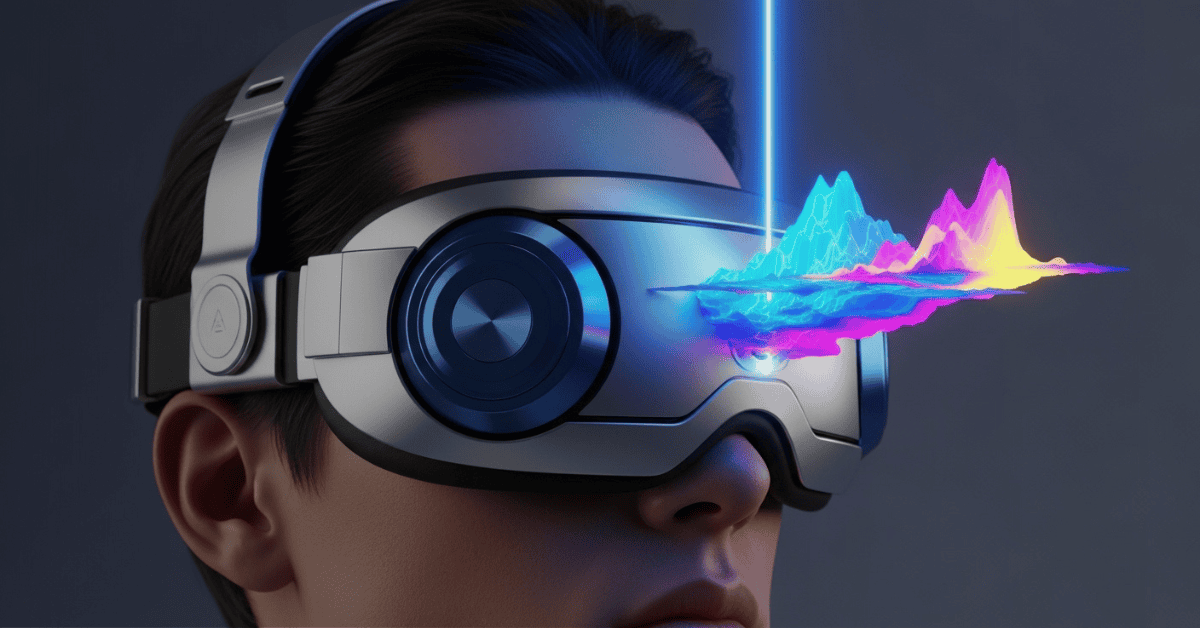
Revolutionary brain-computer interface technology transforms the ethereal realm of dreams into tangible, recordable experiences through advanced neuroscience and artificial intelligence.
The Night Laboratory Awakens
In a sleep laboratory in California, Dr. Sarah Chen watches glowing screens display cascading neural activity patterns. Her volunteer sleeper lies motionless, wearing a sleek headband adorned with sensors that pulse softly in the darkness. Tonight, they’re attempting something that would have been pure fantasy just a decade ago: recording dreams as they unfold in real time.
The volunteer’s eyes dart rapidly beneath closed lids. REM sleep has begun. The headband’s ultrasonic transducers activate, sending precisely calibrated sound waves into specific brain regions while artificial intelligence algorithms decode the neural symphony of a dreaming mind.
From Ancient Mystery to Modern Marvel
Humans have wondered about dreams since civilization began. Ancient Egyptians believed dreams carried messages from gods. Greek philosopher Aristotle theorized that dreams resulted from lingering sensory impressions. Sigmund Freud claimed dreams revealed hidden desires. Yet despite millennia of fascination, dreams remained locked within our sleeping minds.
The breakthrough came from understanding how our brains construct visual experiences. Neuroscientists discovered that dreaming activates the same visual cortex regions used during waking vision. This revelation opened a tantalizing possibility: if researchers could decode these neural signals, they might reconstruct dream imagery.
Recent advances in brain-computer interface technology have made this science fiction scenario increasingly plausible, with devices using combinations of ultrasound and machine learning models created from EEG and fMRI data.
The Halo Revolution
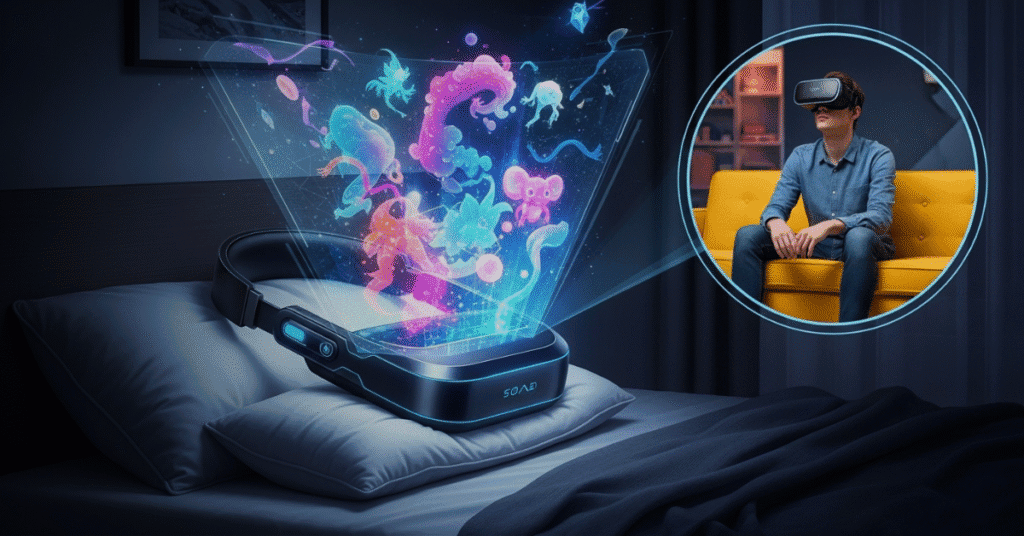
Prophetic AI, an American technology company, has developed what they call the world’s first wearable device for stabilizing lucid dreams, called the “Halo.” This non-invasive neuromodulation device represents a quantum leap in dream research technology.
The Halo employs a sophisticated multi-layered approach. Functional near-infrared spectroscopy (fNIRS) sensors measure brain activity by detecting changes in blood oxygenation, relying on the principle that active brain regions consume more oxygen. The device monitors neural patterns associated with different sleep stages, identifying the precise moment when REM sleep begins.
Prophetic’s approach combines ultrasound and machine learning to gently influence the dreaming process without disrupting essential restorative sleep phases. When the artificial intelligence platform “Morpheus-1” detects optimal conditions, ultrasonic transducers deliver targeted stimulation to the dorsolateral prefrontal cortex, the brain region associated with self-awareness and critical thinking.
The result? Users experience more lucid dreams—dreams where they become aware they’re dreaming and can potentially exert control over the dream narrative.
Beyond Entertainment: Scientific Frontiers
This technology extends far beyond novelty. Sleep researchers see profound implications for understanding consciousness itself. Dreams might hold keys to memory consolidation, creative problem-solving, and emotional processing. Recording dream content could revolutionize treatments for nightmares, PTSD, and sleep disorders.
Researchers use fMRI to map exact prefrontal cortex activation during lucid episodes, then translate those patterns into EEG signatures that help the device know when to activate its ultrasound stimulation.
The applications spark imagination. Artists might capture dream imagery for creative inspiration. Therapists could analyze recurring nightmare patterns. Students might practice skills during sleep. The boundary between sleeping and waking consciousness begins to blur.
Technical Challenges and Ethical Questions
Dream recording faces significant hurdles. Brain activity patterns vary dramatically between individuals. Neural signals contain enormous complexity that current technology can only partially decode. Privacy concerns loom large—dreams represent our most intimate thoughts.
Scientists emphasize these devices don’t actually “record” dreams like movies. Instead, they detect neural patterns associated with dreaming and attempt to reconstruct approximate visual representations. The technology remains in early development stages, with much work needed before reliable dream recording becomes reality.
Ethical questions multiply. Should employers access employee dreams? Could governments monitor subconscious thoughts? Dream content might reveal personal secrets, medical conditions, or political beliefs. Society must establish boundaries as this technology matures.
The Consciousness Frontier
This technology represents a significant stride in human understanding and experience of dreams, melding cutting-edge neuroscience with artificial intelligence to explore consciousness depths. We stand at the threshold of unprecedented access to our sleeping minds.
Research groups worldwide pursue similar goals using different approaches. Japanese scientists explore direct neural interfaces. European teams investigate dream content analysis through brain imaging. The race accelerates as computational power increases and neuroscience understanding deepens.
Dream recording might transform fields beyond sleep research. Neurology, psychology, artificial intelligence, and philosophy could all benefit from direct access to dreaming minds. We might finally answer fundamental questions about consciousness, memory, and human experience.
Tomorrow’s Dreaming World
With devices like Halo slated for release in 2025, the era of controlled dreaming approaches rapidly. Early adopters will likely be researchers, sleep clinics, and curious individuals willing to explore this new frontier.
The implications stretch beyond individual experience. If dreams can be recorded, shared, and analyzed, we might discover universal patterns in human consciousness. Perhaps dreams contain solutions to waking problems, artistic inspirations, or insights into our deepest fears and desires.
As we prepare to unlock our nighttime adventures, we edge closer to understanding one of existence’s greatest mysteries. The realm of dreams, long protected by the fortress of sleep, stands ready to reveal its secrets to those bold enough to venture inside.
What stories might your dreams tell, and what adventures await in the vast landscape of the sleeping mind?
Sources
• Prophetic AI: Ultrasonic Lucid Dreaming Technology. Prophetic.com (2023-2025) • BBC Science Focus Magazine: “Halo Sleep Headband Technology.” February 2024 • CNBC: “AI Startup Prophetic Aims to Build Dream Control Headset.” October 2023
• Live Science: “Ultrasonic Headband Induces Lucid Dreams Using AI.” February 2024 • Journal of Sleep Research: Neural correlates of lucid dreaming and REM sleep studies (2020-2024) • Nature Neuroscience: Brain-computer interface developments in sleep research (2023-2024) • ScienceAlert: “Halo Device Coming in 2025 Designed to Induce Lucid Dreams.” December 2023 • Electropages: “Prophetic AI’s Lucid Dream Device Technology Analysis.” January 2024
Disclaimer: This article is for informational purposes only and should not replace professional medical or scientific advice. Dream recording technology remains in early development stages, and individual results may vary. Consult with qualified healthcare providers before using any sleep-related devices or treatments.