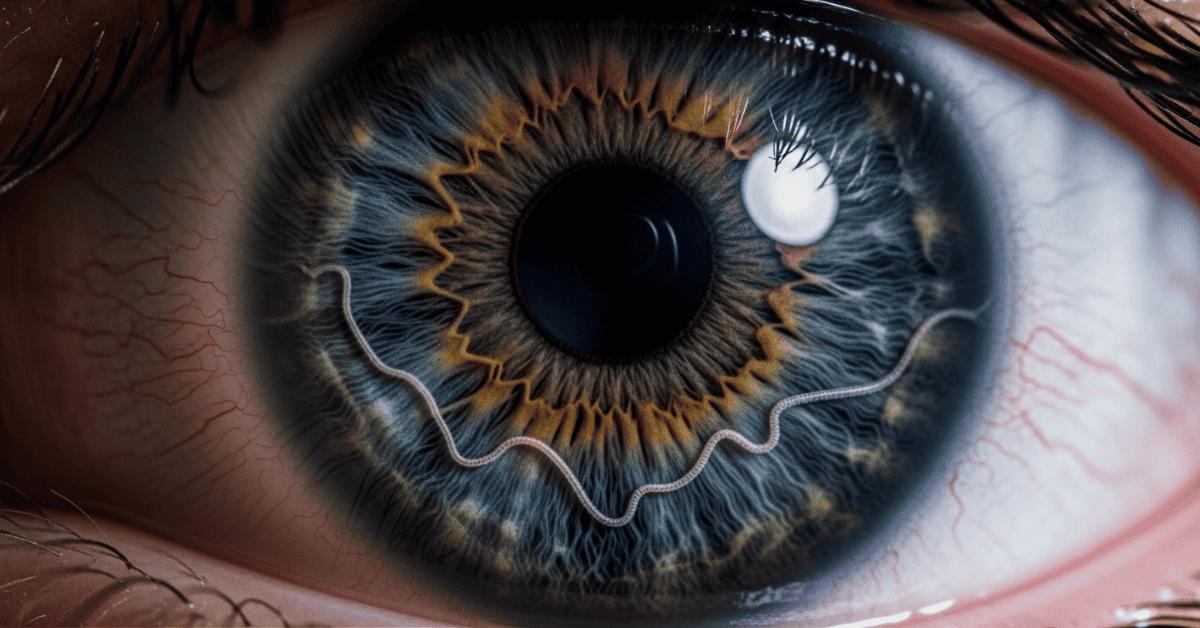
Maria felt something moving beneath her eyelid. For weeks, the 68-year-old Nebraska woman had attributed her eye irritation to dust from her rural farm. But when the sensation persisted, accompanied by swelling and discharge, she visited her ophthalmologist.
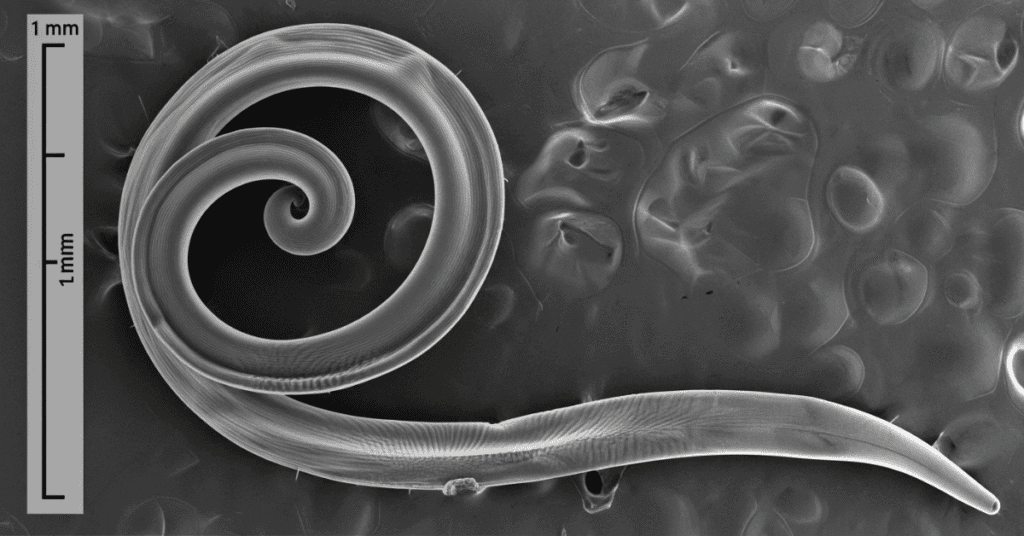
What doctors found wasn’t dust or debris. Fourteen translucent, thread-like worms writhed beneath Maria’s upper eyelid, each measuring about half an inch long. The diagnosis shocked everyone in the room: Thelazia gulosa, cattle eyeworms that had somehow made their way into a human host.
This case, published in Clinical Infectious Diseases, represents only the second confirmed human infection with this particular parasite in North America. Yet it illuminates a growing concern among medical professionals worldwide.
Ancient Parasites in Modern Times
Parasitic eye infections have plagued humans throughout history. Ancient Egyptian texts describe eye ailments that modern researchers now recognize as parasitic diseases. Medieval physicians documented mysterious eye conditions that caused “worms to emerge from the eye,” though they lacked the tools to identify specific species.
The Thelazia genus comprises over 30 species of nematodes that primarily infect the eyes and tear ducts of mammals. These parasites evolved sophisticated survival strategies over millions of years, using flies as intermediate hosts to spread between animals.
Most species show strict host specificity, infecting only their preferred animal species. Thelazia gulosa typically targets cattle, while Thelazia californiensis prefers dogs and cats. Humans usually remain off-limits to these ancient parasites.
Breaking the Species Barrier
Dr. Richard Bradbury, the parasitologist who identified Maria’s infection, explains how these cross-species jumps occur. “Climate change and habitat destruction bring humans into closer contact with wildlife,” he notes. “This creates opportunities for parasites to encounter new hosts.”
The lifecycle of Thelazia parasites requires specific conditions. Adult worms live in tear ducts and lay eggs that hatch into microscopic larvae. Face flies and other insects consume these larvae while feeding on eye secretions. Inside the fly, larvae develop into infectious forms ready to infect new hosts.
When infected flies land near human eyes, they can deposit parasites during feeding. Rural environments increase exposure risk, particularly for people working closely with livestock or spending extensive time outdoors.
Recent research reveals that human infections with animal eyeworms are more common than previously thought. Cases have emerged across North America, Europe, and Asia, suggesting these parasites adapt more readily to human hosts than scientists once believed.
Global Patterns of Infection
The World Health Organization tracks various parasitic eye infections worldwide. Onchocerciasis, caused by Onchocerca volvulus, affects over 15 million people, primarily in sub-Saharan Africa. This “river blindness” parasite spreads through blackfly bites and can cause permanent vision loss.
Loiasis, another eye parasite, infects approximately 13 million people in Central and West Africa. The Loa loa worm creates characteristic swelling as it migrates beneath the skin and across the eye surface. Local populations have developed cultural names for this phenomenon, calling it “African eye worm.”
Climate patterns influence parasite distribution significantly. Warmer temperatures accelerate insect breeding cycles, potentially increasing transmission rates. Drought conditions force both wildlife and insects to congregate around limited water sources, creating infection hotspots.
Researchers use satellite imagery and climate modeling to predict where new infections might emerge. These tools help public health officials prepare for potential outbreaks and implement preventive measures.
Symptoms and Detection Challenges
Early symptoms of eye parasites often mimic common conditions like allergies or bacterial infections. Patients report persistent irritation, excessive tearing, and foreign body sensation. Many delay seeking medical attention, assuming their symptoms will resolve naturally.
Advanced cases present more distinctive signs. Visible worms moving across the eye surface create unmistakable symptoms, though not all species remain visible to patients or casual observers. Some parasites burrow deep into tissues, making detection extremely difficult.
Diagnostic techniques have evolved significantly over recent decades. High-resolution imaging allows doctors to identify parasites within eye structures. Molecular testing can confirm species identification, crucial for selecting appropriate treatments.
Dr. Sarah Mitchell, an infectious disease specialist, emphasizes the importance of travel and exposure history. “We ask patients about contact with animals, outdoor activities, and recent travel,” she explains. “These details often provide crucial clues for diagnosis.”
Treatment and Prevention Strategies
Treatment approaches vary depending on the parasite species and infection severity. Mechanical removal works well for larger, accessible worms like Thelazia species. Surgeons carefully extract parasites using fine forceps under magnification.
Antiparasitic medications prove effective against many species. Ivermectin, originally developed for veterinary use, now treats various human parasitic infections. Treatment duration and dosage depend on the specific parasite and patient factors.
Prevention focuses primarily on avoiding exposure to infected insects. Protective eyewear helps during outdoor activities in high-risk areas. Insect repellents provide additional protection, though their effectiveness varies among different fly species.
Livestock management plays a crucial role in reducing infection risk. Regular deworming of cattle and other animals reduces parasite loads in the environment. Proper manure management limits breeding sites for carrier insects.
The Changing Landscape of Disease
Environmental changes reshape parasite-host relationships worldwide. Deforestation brings humans into contact with previously isolated wildlife populations and their parasites. International travel accelerates the spread of exotic parasites to new geographic regions.
Urban expansion creates edge environments where domestic animals, wildlife, and humans interact more frequently. These zones often experience higher rates of zoonotic disease transmission, including parasitic eye infections.
Scientists monitor these trends using advanced surveillance systems. Genetic sequencing helps track parasite evolution and identify new strains capable of infecting humans. This information guides development of new treatments and prevention strategies.
Research institutions collaborate globally to understand emerging patterns. The One Health approach recognizes the interconnections between human, animal, and environmental health, leading to more comprehensive disease prevention strategies.
Looking Through New Eyes
As climate change and globalization continue reshaping our world, the boundary between human and animal diseases grows increasingly blurred. What begins as cattle eyeworms in Nebraska pastures may eventually evolve into a more significant human health concern.
Scientists work urgently to understand these evolving relationships before they become major public health challenges. Each case like Maria’s provides valuable insights into how ancient parasites adapt to modern conditions and new hosts.
The story of eye parasites reminds us that we share our planet with countless microscopic inhabitants, most remaining invisible until they cross into our world. As we venture deeper into natural environments and alter ecosystems through development, we must remain vigilant for the unexpected passengers that might hitch a ride into human territory.
Sources
• Clinical Infectious Diseases, “Human Thelazia gulosa Infection in the United States” (2023) • World Health Organization, “Onchocerciasis Fact Sheet” (2024) • Centers for Disease Control and Prevention, “Parasitic Eye Infections” (2023) • Nature Microbiology, “Climate Change and Vector-Borne Parasites” (2024) • American Journal of Tropical Medicine and Hygiene, “Emerging Zoonotic Eye Parasites” (2023) • Smithsonian Institute, “Evolution of Host-Parasite Relationships” (2024) • Journal of Medical Entomology, “Face Flies as Disease Vectors” (2023) • Proceedings of the National Academy of Sciences, “One Health Approaches to Parasite Control” (2024)
Disclaimer
This article is for informational purposes only and should not replace professional medical advice. Consult healthcare providers for diagnosis and treatment of any eye condition or suspected parasitic infection.